

Anthropic rolled out its newest suite of AI tools, and the market’s reaction wasn’t subtle. Software and data analytics stocks sank sharply, not because a toy chatbot launched, but because investors glimpsed how generative AI might rewrite business models and value chains across industries, including fintech.
Anthropic’s Claude Cowork and the enhanced Claude Opus 4.6 are more than iterative model improvements. They represent a class of agentic AI tools capable of executing multi-step knowledge work that has traditionally powered enterprise software value propositions.
The Fintech industry’s core workflows: risk analysis, compliance, portfolio analytics, fraud screening, and model creation are knowledge-intensive and workflow-heavy. AI that can do work, not just respond to prompts, changes assumptions.
Below are the top implications of this shift for the fintech market.
1. Rethinking the Value of Traditional SaaS in Fintech Workflows
We’ve been here before, automation buzz cycles. However, agentic AI is different. Tools like Claude Cowork can autonomously execute sequences of tasks that mimic what platforms like financial planning software, risk engines, and compliance tools do today.
Fintech products often sell based on reducing manual effort: dashboards, alerts, and analytics. Agentic AI promises to replace entire sequences: ingest data, analyze, generate reports, and even take follow-up actions. For investors, that was scary enough to knock billions off software valuations.
This isn’t a minor feature play. It’s a redefinition of the software value chain. Fintech vendors must now ask: Are we selling tooling or execution? Traditional subscription pricing may fail if LLM agents can deliver outcomes at a lower cost.
2. Operational Risk and Model Governance Move to the Fore
Agentic AI introduces complexity that traditional fintech risk frameworks don’t account for. If an AI assistant autonomously identifies investment risk, updates models, or categorizes transactions, who bears accountability? Regulators haven’t fully articulated frameworks for this yet.
Fintech CISOs and compliance leaders will be on the front lines. Agentic AI requires new policies for decision traceability, auditability, and oversight. If an automated process flags fraudulent activity or loan default probability, firms need confidence that the model’s reasoning is explainable, not just plausible.
This isn’t a small lift. It demands investment in governance layers and internal audit processes specifically for AI outputs, not just data inputs.
3. Competitive Pressure on Specialist Fintech Platforms
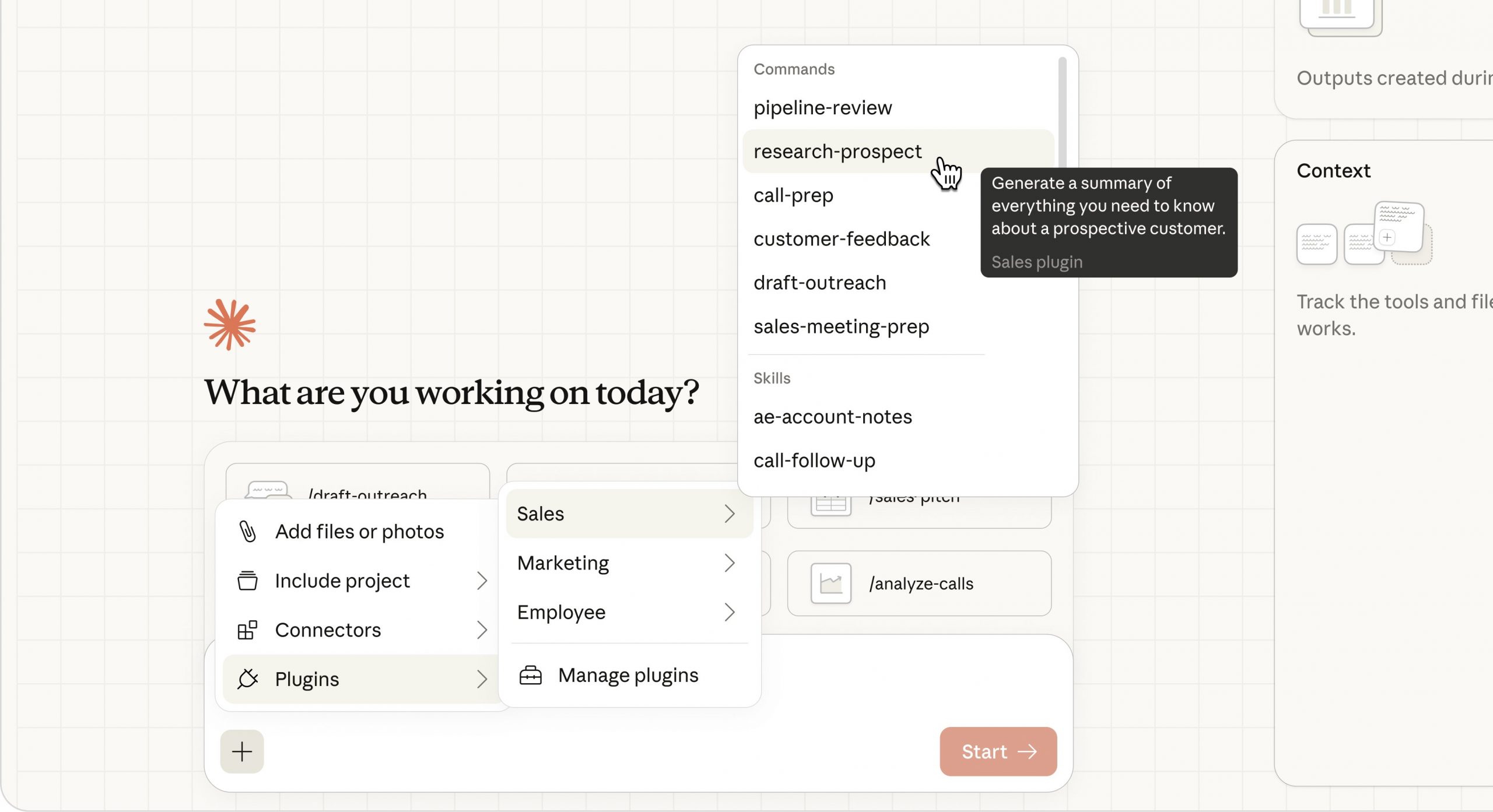
Anthropic’s plugins aren’t generic; they are domain extensions that tailor AI to tasks like financial analysis or legal workflows. When a generic agentic AI tool can automate financial modeling, forecasting, and reporting, tasks that specialist platforms have sold as value-added, the pricing power of niche fintech stacks weakens.
Banks and fintechs could bypass expensive enterprise software or niche analytics tools by embedding agentic AI directly into workflows. That pressures vendors to embed or partner rather than compete head-on.
The cost base of fintech startups that deliver verticalized insights may compress. Or they may need to differentiate on data quality, integration depth, or regulatory compliance capabilities rather than raw analytic horsepower. Either path requires strategy shifts, not incremental roadmaps.
The company explained, “We’re adding support for plug-ins, which let you bundle any skills, connectors, slash commands, and sub-agents together to turn Claude into a specialist for your role, team, and company.”
4. Workforce and Talent Strategies Must Align Soon
There’s a common misconception that AI will replace skilled labor en masse in finance. Reality is messier. Agentic AI will automate parts of analysts’ workflows, data ingestion, initial drafts, scenario generation, but not judgment, fiduciary decision-making, or customer nuance.
This creates a skills gap paradox. Firms need fewer humans doing repetitive tasks but more humans capable of supervising, validating, and interpreting AI outputs. That skill set is rare. Most financial operations teams today do not blend deep domain expertise with AI governance skills.
Fintech organizations must rethink hiring, training, and career paths. Hybrid roles, part quant, part AI evaluator, will become crucial. Teams that cling too tightly to old roles risk bottlenecks; teams that assume AI will replace judgment will expose risk.
5. Market Volatility Reflects Anxiety, Not Imminent Obsolescence
The stock market reaction, sharp declines across software, analytics, and even financial services firms, was not solely about capability. It was about fear and uncertainty.
Analysts argue that fears of wholesale disruption are exaggerated. Many incumbents already embed AI in core products. The presence of agentic AI doesn’t mean legacy fintech platforms become worthless overnight. It means incumbents must integrate these capabilities or risk losing relevance.
For strategic leaders, the key question isn’t whether AI will matter. It’s how quickly your organization embeds AI into execution chains that matter for revenue, risk, and customer experience. In finance, mis-executed AI is worse than slow AI.
AI Agents Are Shifting the Rubric for Value in Fintech
Anthropic’s latest tools didn’t just rattle markets. They revealed a future where AI is judged, in financial contexts, by what it delivers, not what it predicts.
For fintech leaders, the implications are already unfolding:
- Value propositions must evolve from software modules to execution outcomes.
- Governance and risk frameworks must account for autonomous decision layers.
- Competitive strategies must assume AI agents will be table stakes.
- Workforce strategies must balance automation with oversight.
- Market volatility is a signal, not a destination.
The era of code generation and simple prediction is giving way to agentic automation, tools that can act on behalf of the business, not just suggest actions. That’s what genuinely unsettles markets.
FAQs
1. How could Anthropic’s AI tools impact fintech platforms and software vendors?
Agentic AI can automate multi-step knowledge work that many fintech tools monetize today. Reporting, compliance reviews, risk analysis, and customer support. If AI delivers those outcomes directly, traditional SaaS features lose pricing power. Platforms must shift from tools to execution.
2. Will AI agents replace fintech analysts and operations teams?
Not wholesale. They remove repetitive tasks first. Data prep, drafting reports, and basic reviews. Human roles move toward oversight, exception handling, and judgment. Fewer clerical workflows. More governance and decision accountability.
3. What risks do agentic AI systems introduce for fintech compliance and security?
Traceability and accountability. If an AI flags fraud, scores credit, or generates advice, regulators will expect explainability and audit trails. Black-box outputs create legal exposure. Governance and model monitoring become as critical as the model itself.
4. Should fintech firms build their own AI agents or integrate third-party tools like Anthropic?
Depends on control requirements. Third-party models accelerate deployment but increase vendor dependency and data exposure risk. In-house builds offer control and compliance alignment but require talent and infrastructure. Most enterprises end up with a hybrid approach.
5. Why did financial and software stocks react so sharply to Anthropic’s launch?
Investors aren’t pricing today’s revenue. They’re pricing future margin pressure. If AI agents compress the need for specialized software and billable services, growth assumptions change. The sell-off reflects business model risk, not immediate obsolescence.
To participate in upcoming interviews, please contact us at info@intentamplify.com