


Anti-Money Laundering (AML) transaction monitoring is an essential function of the financial system in the modern world. Transaction monitoring aids banks, fintechs, and many other institutions in identifying suspicious activity in real-time.
In countries across the globe, regulators expect firms to underwrite transactions at a risk-based level, to stop money laundering and the financing of terrorism. Without effective monitoring, firms face significant fines, the ramifications of legal action, and risk ruining their reputations.
The financial implications that accompany a firm’s inability to meet compliance standards are costly. For example, in 2024, numerous global banks paid out millions of dollars’ worth of penalties. These settlements reflected their inability to recognize suspect transfers. In these cases, we can see that regulators are establishing greater expectations and enforcing them more rigorously in a simultaneously shrinking world.
Furthermore, criminals are also becoming more sophisticated in their awareness and understanding of AML compliance, utilizing cross-border means to stash illicit money flows stealthily.
For a firm, monitoring is tied into more than just compliance requirements. Monitoring is also tied into protecting customers, trust protection, and preserving future stability. This article concludes by summarizing why AML transaction monitoring matters and unpacks how it works in the field.
Why AML Transaction Monitoring Matters
Monitoring for money laundering is both legally required and essential for business. Strong AML transaction monitoring is essential for compliance, for risk mitigation, and for consumer confidence. Its importance can be considered in four areas:
Regulatory Compliance
- All global regulators, through the actions of the Financial Crimes Enforcement Network (FinCEN) in the US and the Financial Action Task Force (FATF), require firms to carry out transaction monitoring.
- If you are not monitoring transactions, you may get fined, sanctioned, or lose your licence.
- Banks have seen recent enforcement actions costing them hundreds of millions of dollars due to weak monitoring programs.
Reputation and Customer Trust
- One scandal can shake the confidence of customers, investors, and partners.
- Sound monitoring is an indicator of a firm’s dedication to security and compliance.
- Such confidence is essential to competitiveness in financial markets.
Global Business Enablement
- Firms that do business across borders depend on strong AML regimens to avoid running afoul of the authorities.
- Being able to meet international standards is a way of getting a partnership with international banks and institutions.
- Please also note that good compliance opens the route to growth and going global.
In other words, AML transaction monitoring isn’t just about keeping on top of the ever-increasing regulatory requirements. It is no longer just about securing financial stability, reputation protection, and the ability to build long-term business growth.
Risk Mitigation and Fraud Prevention
- Monitoring systems observe unusual activity that may indicate fraud, money laundering, or terrorist financing.
- Compliance teams are alerted early and can manage a situation before the risk escalates.
- Reducing your exposure also strengthens your firm’s operations and the financial system as a whole.
While the importance of AML transaction monitoring speaks for itself, it is just as important to ensure the systems work as expected.
Detection rules may fall out of date, thresholds may be too high or low, and new financial crime patterns may expose gaps in coverage.
Regulators expect firms to provide evidence of transaction monitoring systems in place, but increasingly, they expect to see it tested, validated, and updated.
Specialized solutions like the Transaction Monitoring Validator (TMV), developed by AML Analytics, help institutions prove that their transaction monitoring rules remain effective, robust, and compliant.
Validating AML Systems with TMV
Effective transaction monitoring is critical in AML, but if it’s not working properly, the monitoring systems are not going to work properly.
Detection rules can be misaligned, threshold levels can differ from risk, and new patterns of crime can evade detection entirely.
Regulators are increasingly demanding that firms not only have a transaction monitoring system in place, but that they can provide validation and demonstrate how they are updating the monitoring systems.
The TMV represents one of the best available solutions to this challenge by enabling financial institutions to safely and systematically validate their transaction monitoring systems using synthetic data and reliably demonstrate that they are effectively monitoring transactions and using appropriate detection rules that alert on risk.
The Transaction Monitoring Validator (TMV) from AML Analytics is among the top solutions available to fulfill this requirement.
TMV allows for safe and consistent testing of a financial institution’s transaction monitoring systems using synthetic data to confirm that detection rules operate effectively with produce alerts.
How TMV Enhances AML Monitoring
-
Scenario Testing
TMV simulates ongoing suspicious and non-suspicious transaction scenarios to test the monitoring system’s reaction.
-
Synthetic Data Validation
TMV provides realistic, synthetic transactions instead of customer data. This method ensures privacy protections while maintaining accuracy in testing.
-
Red Flag Health Checks
TMV runs thousands of synthetic transactions in “Smart Scenarios” and tests established red flags to ensure rules are working as designed and to identify any gaps.
-
Regulatory Alignment
TMV is built to comply with FATF and the EU AML Directives, as well as New York’s Part 504 rules.
-
Actionable Insights
Results from each test are presented via AML Analytics’ Analyser Online platform to provide clear, data-driven reports to compliance teams.
Why TMV is important
Firms validate their monitoring systems to reduce false positive alerts. They strengthen detection accuracy and maintain audit-ready compliance. At the same time, they demonstrate to regulators that their internal monitoring control framework undergoes continuous testing—independent of transaction volume, rather than relying solely on annual validation.
It is this assurance that makes institutions more secure.
The Growing Global AML Market
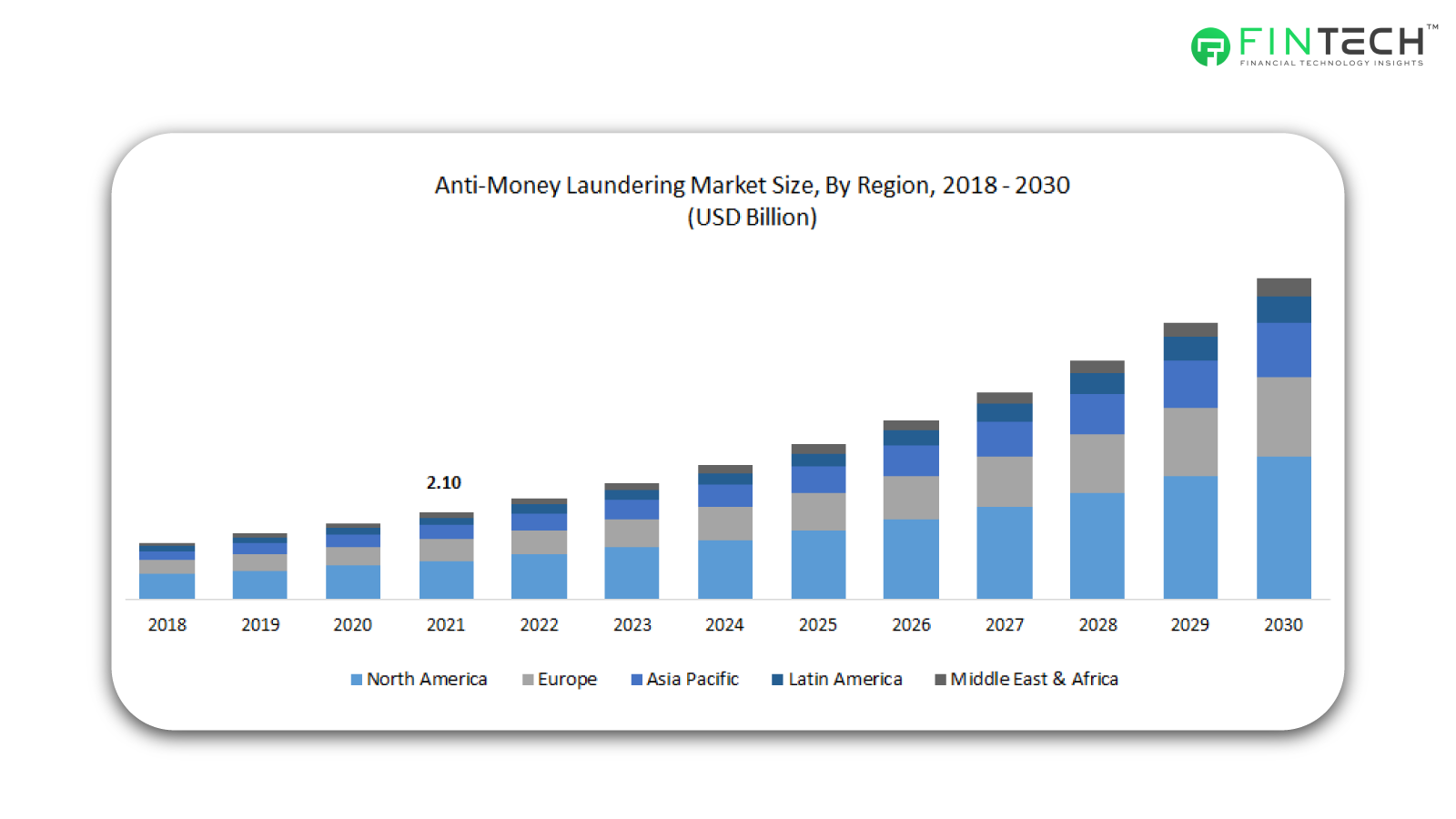
As per Polaris Market Research Analytics, there is a growing demand for AML solutions, and transaction monitoring is at the center of this growth. Polaris Market Research recently forecasted the growth of the AML market (including Transaction Monitoring) to be consistent through 2030.
North America and Europe are currently at the forefront of the growth curve, with the Asia Pacific quickly following behind.
This growth rate is based on three overall trends:
Regulatory Pressure Across Borders:
Global regulators are implementing stricter standards around AML compliance and are forcing companies to comply with advanced monitoring solutions.
Rising Cross-Border Transactions:
As companies attempt to grow across borders, the world is set on each jurisdiction and compliance is based on the laws set forth; therefore, the a need for large, scalable AML systems.
Technology as a Differentiator:
Regions like Asia Pacific and even the Middle East can now invest in AI, automation, and tools such as Transaction Monitoring Validator to enhance compliance and detection solutions.
The global growth means that AML solutions are no longer seen as a cost center; they are a competitive edge. Organizations that will put in smart monitoring will not only decrease risk but also capitalize on increased opportunity across international markets.
The Future of AML Transaction Monitoring
As the regulatory expectations are increasing in stringency and financial crimes are becoming increasingly sophisticated, the future of AML monitoring will be entirely focused on innovation. Firms can no longer use static rules-based systems alone.
The future of AML monitoring will embrace:
1. AI and Machine Learning
Conventional rules may overlook certain subtle patterns that other approaches can detect. Machine learning models identify anomalies, can adjust to new risk factors, and use experience and historical information to further pinpoint potential issues while reducing false positives.
2. Real-Time Analytics
Criminals have leverage over institutions because there is often a time gap between when suspicious transaction activity occurs and when an institution can detect it.
However, by monitoring transactions in real-time, institutions can stop fraud or suspicious activity before it does any harm.
3. End-to-End Data Integration
Combined CDD, monitoring, and sanctions processes within AML will not exist in silos. Future systems will combine customer due diligence (CDD) with transaction monitoring and sanctions screening into a single compliance framework – AML compliance will have more oversight.
4. Cloud and Scalable Monitoring Solutions
With the growing number of cross-border/high-volume digital transactions, AML monitoring (banking, lotteries, investment schemes, etc.) will need to incorporate cloud-based scalable platforms that can provide speed and flexibility to stakeholders.
5. RegTech Partnerships
Working with RegTech providers, including AML Analytics, will allow institutions to use advanced validation tools and help ensure ongoing compliance with developing laws.
6. Proactive Regulator Engagement
Instead of being reactive to regulators, firms will become increasingly engaged with regulators. It will be normal to share validation data, test results, and related analytics with regulators and ensure public disclosure. This action will yield improved risk assessments and reporting on financial crimes, dramatically reducing the fraud risk.
Conclusion
AML transaction monitoring has matured into something far greater than a regulatory compliance checkbox; it is now a fundamental tenet of modern financial integrity. Expectations from regulators are beyond the expectations of building a monitoring system. There is now an expectation that organizations will also validate, maintain, and expose its weaknesses. Solutions, such as AML Analytics’ Transaction Monitoring Validator (TMV), provide the validation and flexibility organizations require to keep pace with the uncertainty that accompanies an evolving threat landscape.
By embedding a culture of ongoing validation, tapping into AI capabilities, and operating in concert with global jurisdictions, organizations can engage their customers, protect their trust, and facilitate their global growth ambitions.
In an environment of increasing regulatory pressure, sophisticated criminals, and cross-border transactions, firms adopt effective AML transaction monitoring as a proactive defense. This approach turns AML compliance into a competitive advantage.
FAQs
1. What trends will shape the future of AML transaction monitoring?
Key trends include greater use of AI and automation, real-time monitoring, cloud-based scalability, an integrated compliance framework, and proactive collaboration with regulators.
2. How does TMV benefit compliance teams?
It allows them to identify monitoring gaps, validate red-flag scenarios, reduce false positives, provide actionable insights, and furnish audit-ready reports to regulators.
3. What is the role of Technology in AML Monitoring?
Advanced technologies like AI, machine learning, synthetic data testing, and real-time analytics reduce false positives, detect new crime patterns, and improve the accuracy of compliance overall.
4. What, if any action, is taken if a firm fails to monitor transactions?
Regulatory fines, sanctions, loss of licence, reputational damage, and, potentially, legal action can be taken against firms. Enforcement action taken in recent years has cost global banks hundreds of millions of dollars.
5. Why is monitoring for AML very important for financial institutions?
The bank ensures compliance with regulations and limits its exposure to financial crime. It also protects customer trust and enables the firm to grow globally without exception.
To participate in our interviews, please write to us at sudipto@intentamplify.com